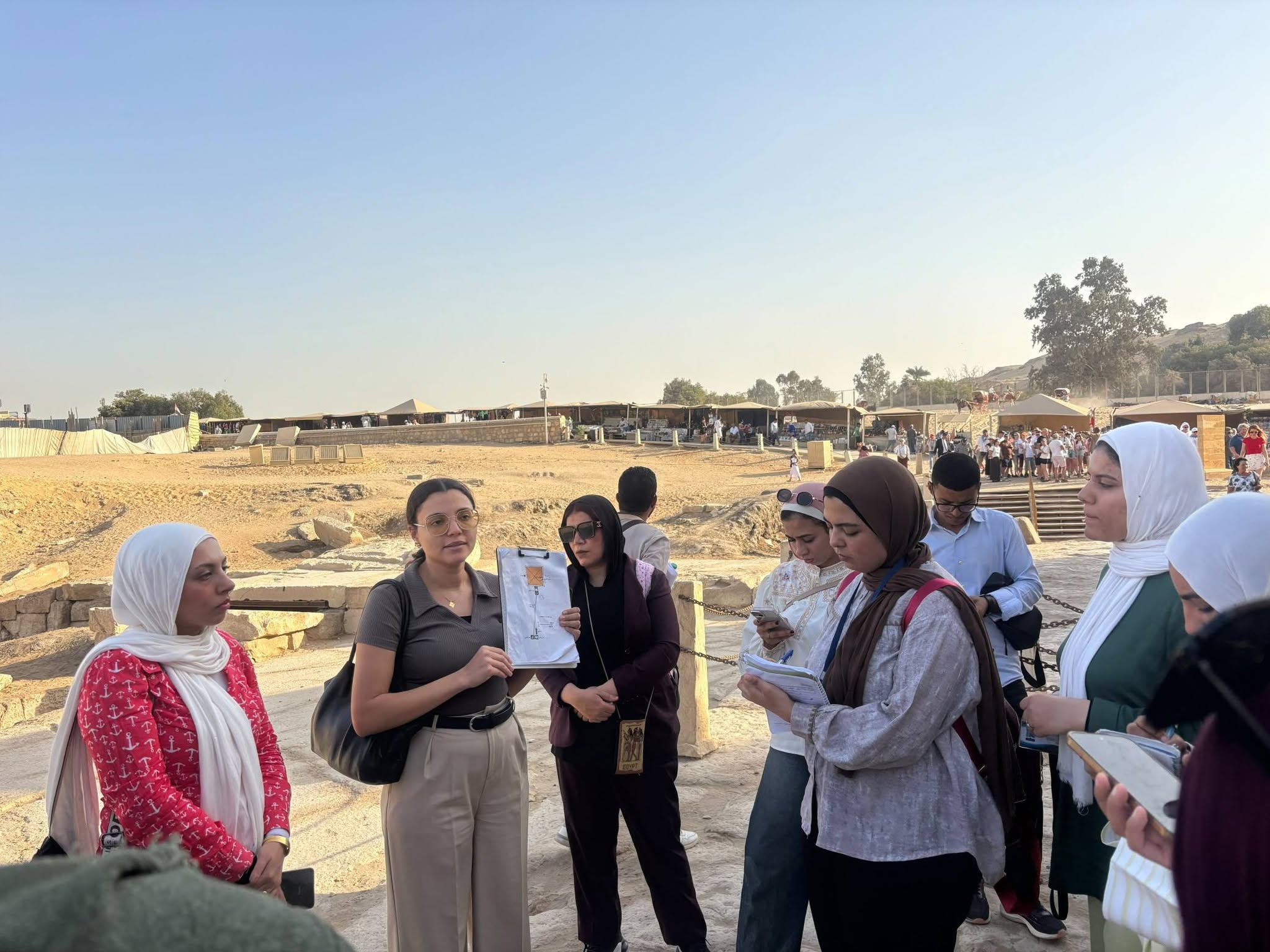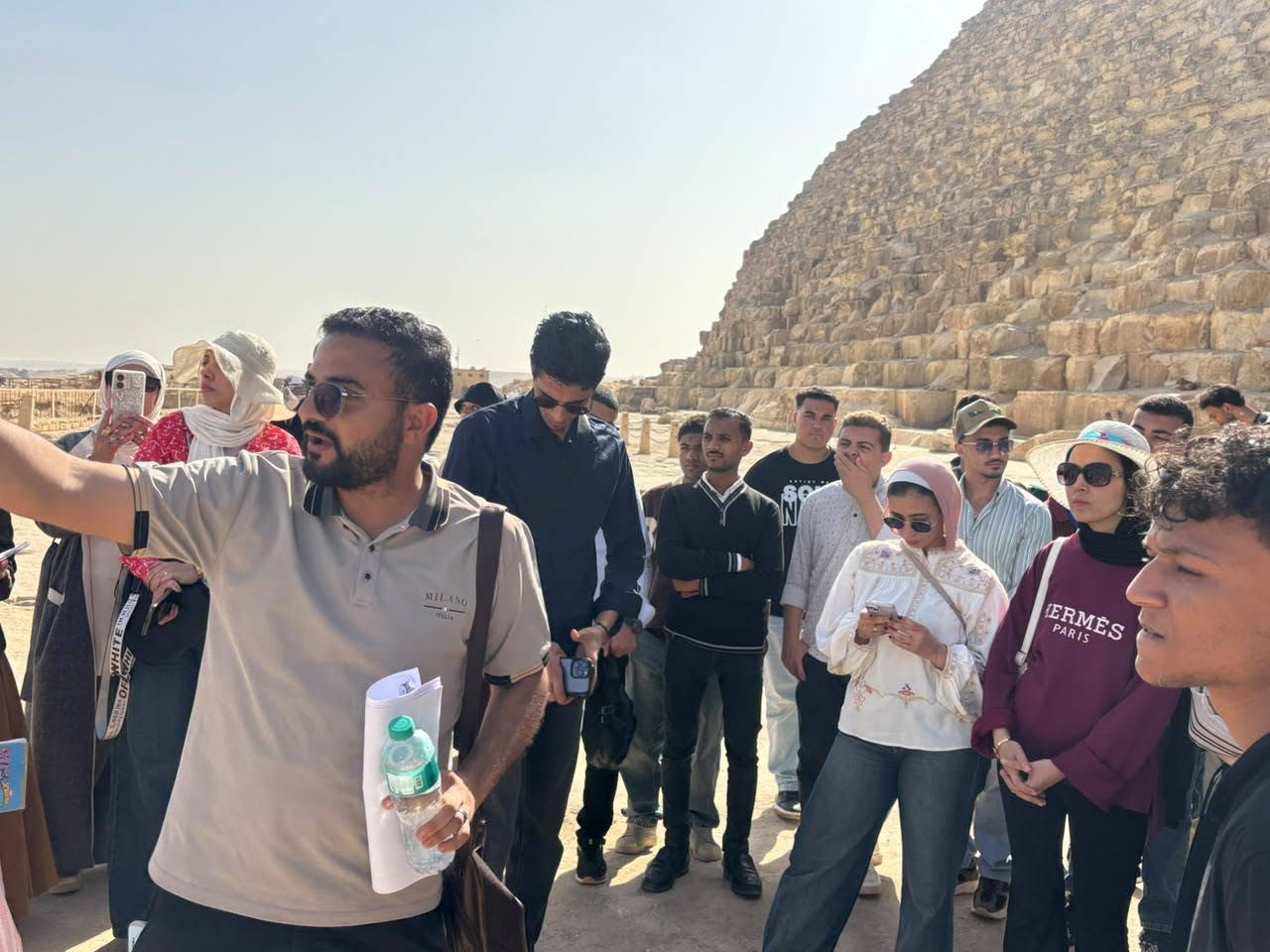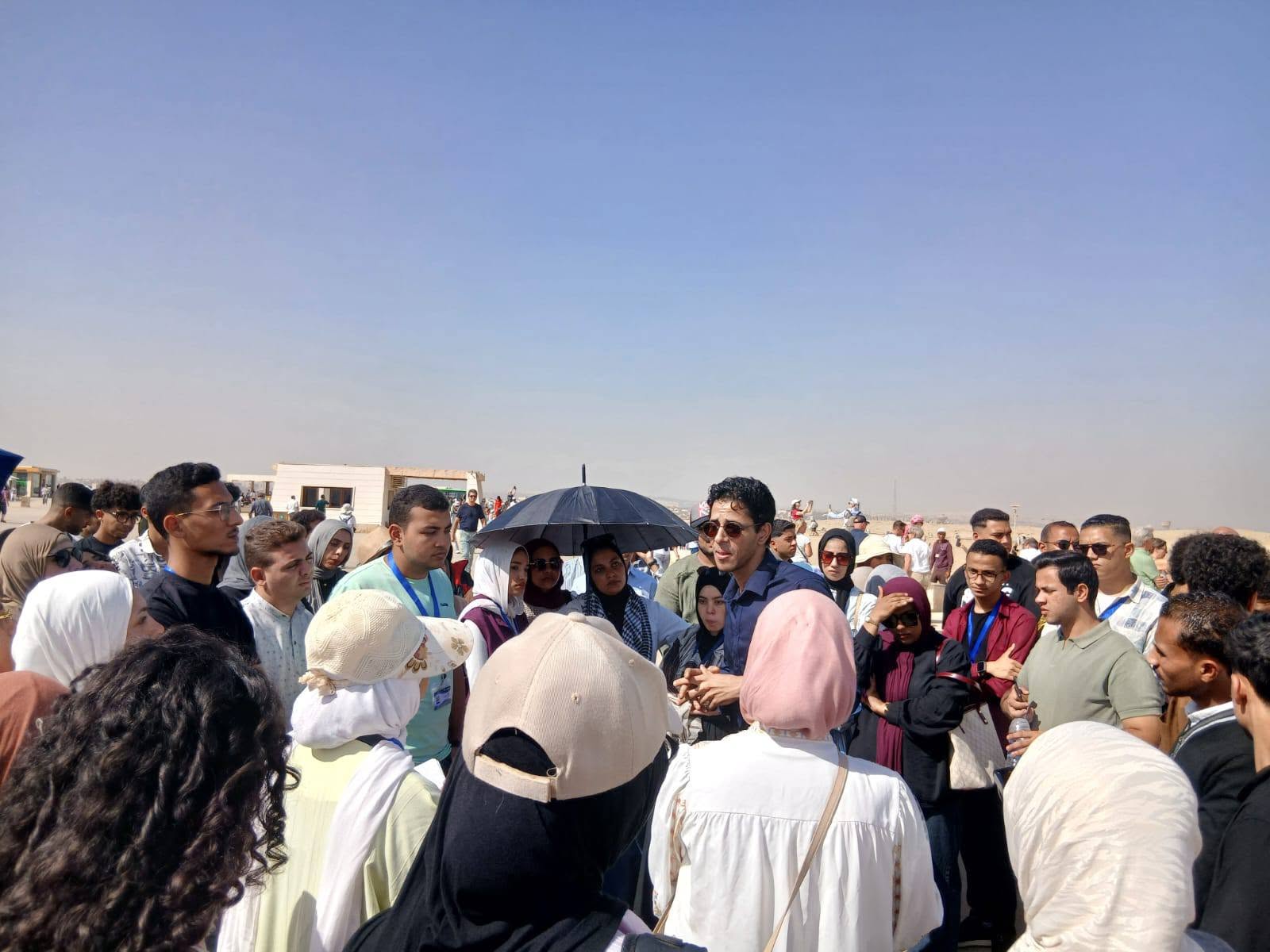


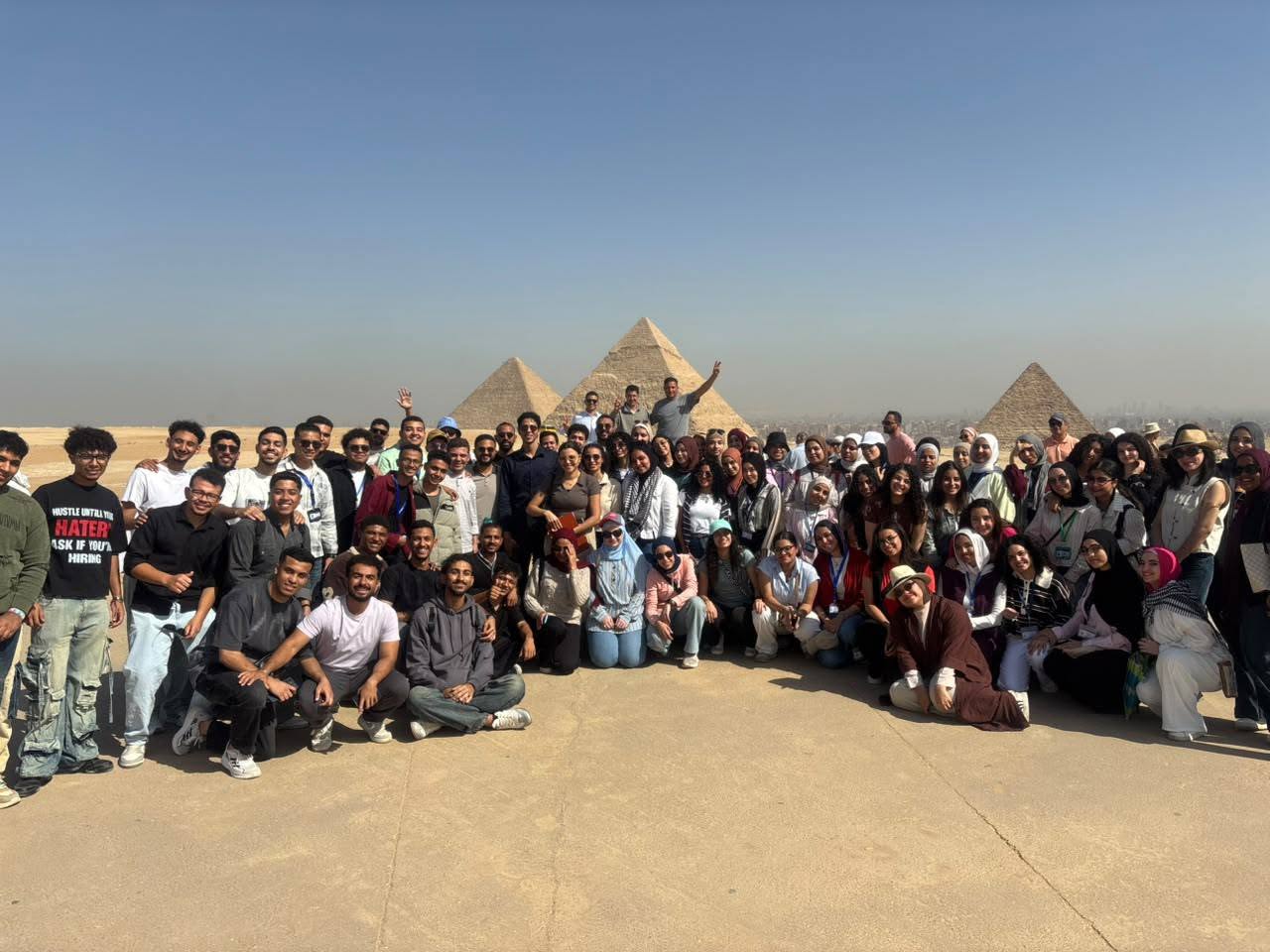
Under the patronage of Prof. Dr. Nancy Fawzy Gamal El-Din, Dean of the Faculty of Tourism and Hotels, Fayoum University, under the supervision of Prof. Dr. Taher Hassan Mohamed, Acting Vice Dean for Education and Student Affairs, and with the academic supervision and follow-up of Prof. Dr. Walid El-Hady Mahmoud Sheikh El-Arab, Head of the Tour Guidance Department, the Department organized a scientific field visit to the Giza Pyramids archaeological area, in support of the applied side of the curriculum and to link theoretical study with archaeological sites on the ground.
The visit included a study of the three Giza pyramids (Khufu, Khafre, and Menkaure) and of the stages in the development of pyramid architecture during the Old Kingdom. Students discussed the architectural characteristics of each pyramid and the main components of the pyramid complexes, including mortuary temples, valley temples, and causeways, as well as the Great Sphinx and its historical and symbolic significance in ancient Egyptian civilization.
The visit also featured on-site discussions of the historical, architectural, and artistic aspects of the area and the importance of the Giza Plateau as one of the world’s most prominent cultural heritage sites. The focus was on the Fourth Dynasty and the role of its kings in building the pyramids, construction methods and architectural planning of the pyramid complexes, and the main theories on how the pyramids were built.
Academic supervision and field training of the students were provided by:
- Mr. Ayman Ahmed, Assistant Lecturer in the Tour Guidance Department
- Ms. Nancy Magdy, Teaching Assistant in the Tour Guidance Department
- Mr. Mansour Thabet Massoud, Teaching Assistant in the Tour Guidance Department
The visit saw excellent student engagement and commitment, contributing to the development of their on-site presentation skills, their ability to read an archaeological site, and their ability to connect architectural elements and historical context to the practice of tour guiding.
This visit is part of the Tour Guidance Department’s plan to strengthen field training, develop its students’ applied experience, and prepare them in line with the requirements of work in tour guiding and cultural heritage.